
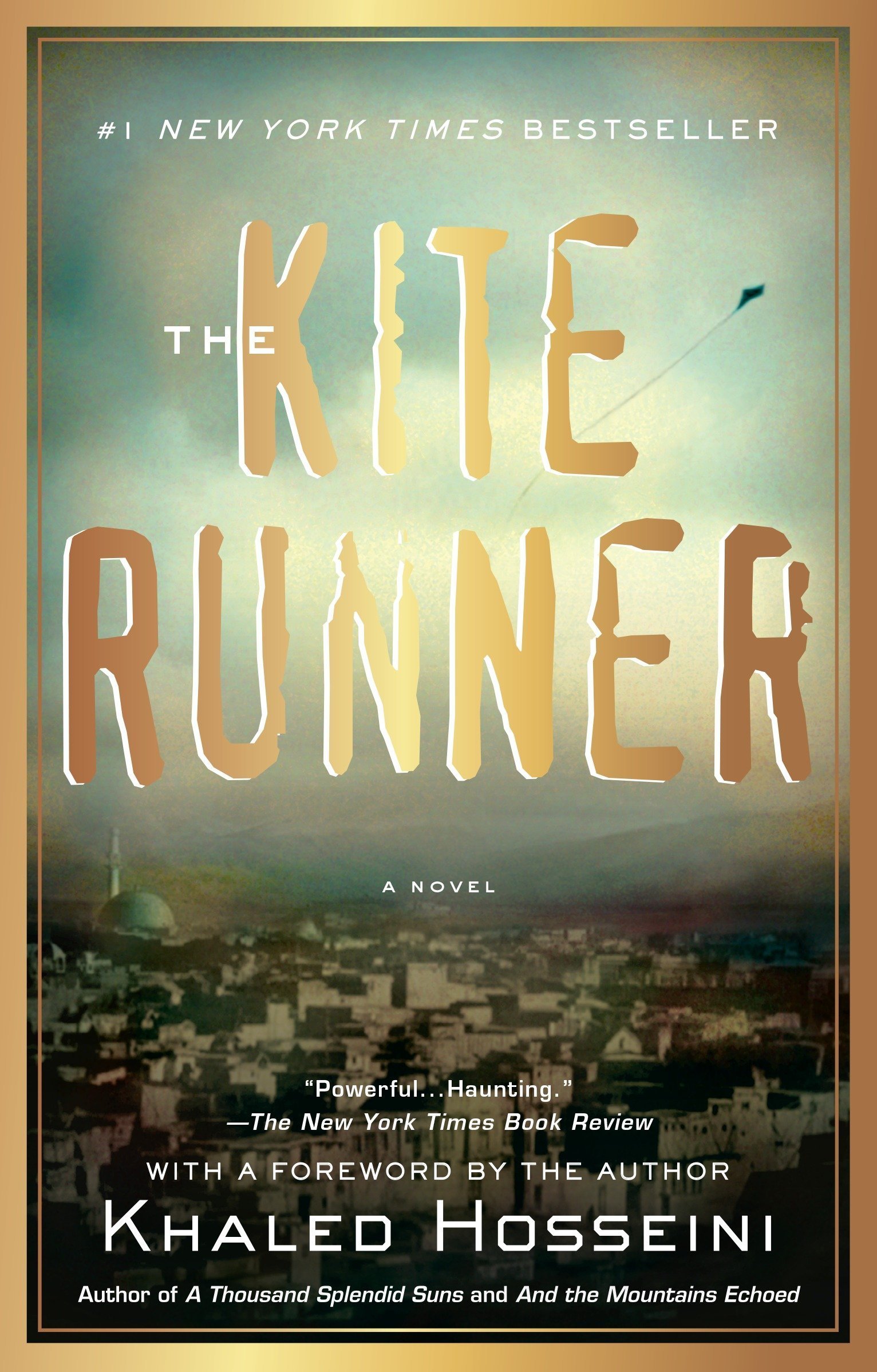
The Kite Runner by Khaled Hosseini
Everyone has made a mistake that they wish they could take back. But what if one followed you for a lifetime? Khalid Hosseini’s The Kite Runner narrates a compelling story about friendship, guilt, and forgiveness that shows how the choices that we make stay with us forever. Against the background of Afghanistan’s political transformation, the novel combines deeply personal relationships with historical events, creating a tale that is both emotionally moving and culturally insightful.
Set in Kabul, the story follows Amir, who grows up with all the privileges of being a wealthy businessman’s son. Hassan, the young son of the family servant, is always by Amir’s side. They grow up inseparable, filling their days with street adventures, reading stories, and chasing kites across Kabul. However, an unspoken barrier of social class and ethnic division always hangs between them. While Amir is completely consumed by a desperate need for his father’s approval, Hassan gives Amir nothing but absolute, unquestioning loyalty.
Everything changes after Kabul’s annual kite fighting tournament. An incident alters Amir forever, leaving him with a massive amount of guilt, forcing him to abandon his friendship with Hassan. As the years fly by, Afghanistan is plunged into political chaos with the Soviet invasion taking place. As a result, Amir and his father are forced to flee their home in search of refuge in the United States. With Amir growing older, he goes to college, gets married, and becomes a writer, but he is never able to forget the mistakes he made in his childhood. After many years have passed, he receives an unexpected phone call which brings the opportunity for him to return home to Afghanistan, a country that has been totally changed by war and the Taliban.
The characters are among my favorite things about this novel. They appear like real people since most of them are not purely good or bad; each of them has various flaws and conflicts. As a complex main character, Amir makes mistakes and is tormented with guilt related to his childhood. At some points in the story, I felt secondhand embarrassment because of his decisions, but that also made him feel more original. Hosseini portrayed several feelings like regret, fear, and hope with great understanding and ability, even striving to create an interesting bond between Amir and his father. I also liked how he made Amir a dynamic character while Hassan remained a static one.
Overall, I loved The Kite Runner because all the characters were emotionally powerful and how it had an overarching message for the audience using themes like friendship, guilt, and forgiveness. As someone interested in how Afghanistan’s history and transformations impact the characters over time, I found this novel to be perfect. Hence, I give this book 4.5 out of 5 and would suggest it to people who enjoy emotionally powerful novels filled with intricately developed characters and profound messages.
Reviewed by Teen Volunteer, 7/21/2026.