
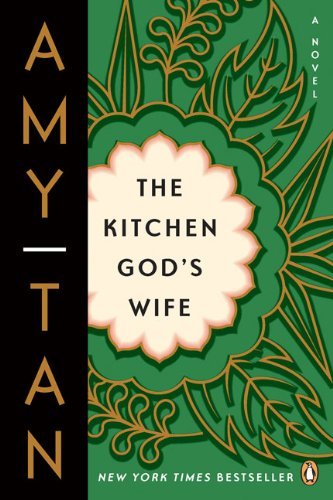
The Kitchen God’s Wife by Amy Tan
As an Asian reader, I love reading books about the Asian American experience because I can relate to them a lot. The Kitchen God’s Wife by Amy Tan is an example of one, and is by far one of my favorite books I’ve read in a long time.
The story revolves around a Chinese-American woman named Winnie Louie and her relationship with Pearl, her daughter. When she believes she is dying, Winnie reveals a lifetime of secrets to Pearl, including her experiences in China during World War II and her abusive first marriage. This forces Pearl to confront her own secret regarding her multiple sclerosis, a life-changing disease that she was hesitant to mention to her mother because of her mother’s superstitious beliefs. Ultimately, these revelations strengthen the bond between mother and daughter.
Winnie was raised in China whereas Pearl was raised in the United States, so they inevitably have different views of the world. The narrative switches between their perspectives, which is a really good way of keeping a reader engaged because you can empathize with both characters despite their conflicting opinions. Winnie recounts her life beginning from her childhood with her mother, her father’s second wife who mysteriously disappears one day, to when she moved to the U.S. Her story is very well written with just the right amount of detail, not so much that you start to skim pages but not so little that it’s not captivating. The tension peaks regarding Pearl’s true parentage, indicating that their stories are seamlessly linked – Winnie’s doesn’t necessarily end before Pearl’s begins.
The story revolves around a Chinese-American woman named Winnie Louie and her relationship with Pearl, her daughter. When she believes she is dying, Winnie reveals a lifetime of secrets to Pearl, including her experiences in China during World War II and her abusive first marriage. This forces Pearl to confront her own secret regarding her multiple sclerosis, a life-changing disease that she was hesitant to mention to her mother because of her mother’s superstitious beliefs. Ultimately, these revelations strengthen the bond between mother and daughter.
Winnie was raised in China whereas Pearl was raised in the United States, so they inevitably have different views of the world. The narrative switches between their perspectives, which is a really good way of keeping a reader engaged because you can empathize with both characters despite their conflicting opinions. Winnie recounts her life beginning from her childhood with her mother, her father’s second wife who mysteriously disappears one day, to when she moved to the U.S. Her story is very well written with just the right amount of detail, not so much that you start to skim pages but not so little that it’s not captivating. The tension peaks regarding Pearl’s true parentage, indicating that their stories are seamlessly linked – Winnie’s doesn’t necessarily end before Pearl’s begins.
Even though the mother-daughter relationship is emphasized the most, other relationships are also significant in the story. We see the importance of sisterhood between Winnie and Helen, a friend who stuck by her side throughout her first marriage up to the present day. Their friendship was unlikely as they disagreed on many small things. However, the harrowing experiences of war taught them to appreciate each other’s company despite their constant disagreements. Their strong bond directly refutes the idea that ‘blood is thicker than water’ as they were endlessly loyal and kept each other’s secrets through everything. It is Helen that convinces both Winnie and Pearl to finally tell each other what they’ve been holding in.
The major themes of The Kitchen God’s Wife are the complexities of mother-daughter relationships, the impact of war and displacement, and the struggles of women in a patriarchal society. All three are inextricably linked in this novel and are well-developed. As someone who was raised in the west by parents who had moved from Asia, this book resonated with me. If you share a similar experience or have migrated yourself, I definitely recommend you try it!
Reviewed by Teen Volunteer, 8/17/25.